
Arnie Weissmann
Perhaps counterintuitively, an adventure often requires a fair amount of inaction. This came home to me during the Adventure Travel World Summit in Puerto Natales, Chile, last week.
The Summit, organized by the Adventure Travel Trade Association (ATTA), is unique in that attendees must practice what they preach in the midst of its annual meeting. This year, Day 2 was the designated Day of Adventure (ominously abbreviated as DOA), when all attendees must choose an excursion hosted by a local inbound operator to get a taste of the experiences discussed on surrounding days.
On this year’s DOA, most of us headed to Torres del Paine National Park, about a two-hour drive into the heart of Patagonia. I had been a keynote speaker the day before — more about that in a moment — but on the morning of the DOA I was standing in a cold drizzle for an hour, hoping that the puma our tracker had spotted beneath a bush would wake up and, with luck, rise higher than the pampa grass that surrounded her.
So yes, inactivity can be part of adventure (though I suppose I could count my chattering teeth as motion). My DOA was billed as a wildlife and landscape photography adventure, and I signed up knowing that wildlife photography often requires generous amounts of patience. My cohort and I were richly rewarded when the puma did get up and began walking toward the road where we (and the occupants of six other vans) had gathered.

A Patagonian puma begins a hunt. Photo Credit: Arnie Weissmann
Our guide, Martin Aylwin, operations manager of Kali Travels and Adventures, did the right thing: He told us to back up significantly to let the puma pass. Regrettably, not all guides were acting as responsibly and, if anything, their groups crowded toward the cat. The puma stopped, crouched for about 30 seconds, then turned around and walked up the hill behind it, out of sight.
Aylwin shook his head. “She wanted to cross the road to get to guanacos (a relative of the llama),” he said.
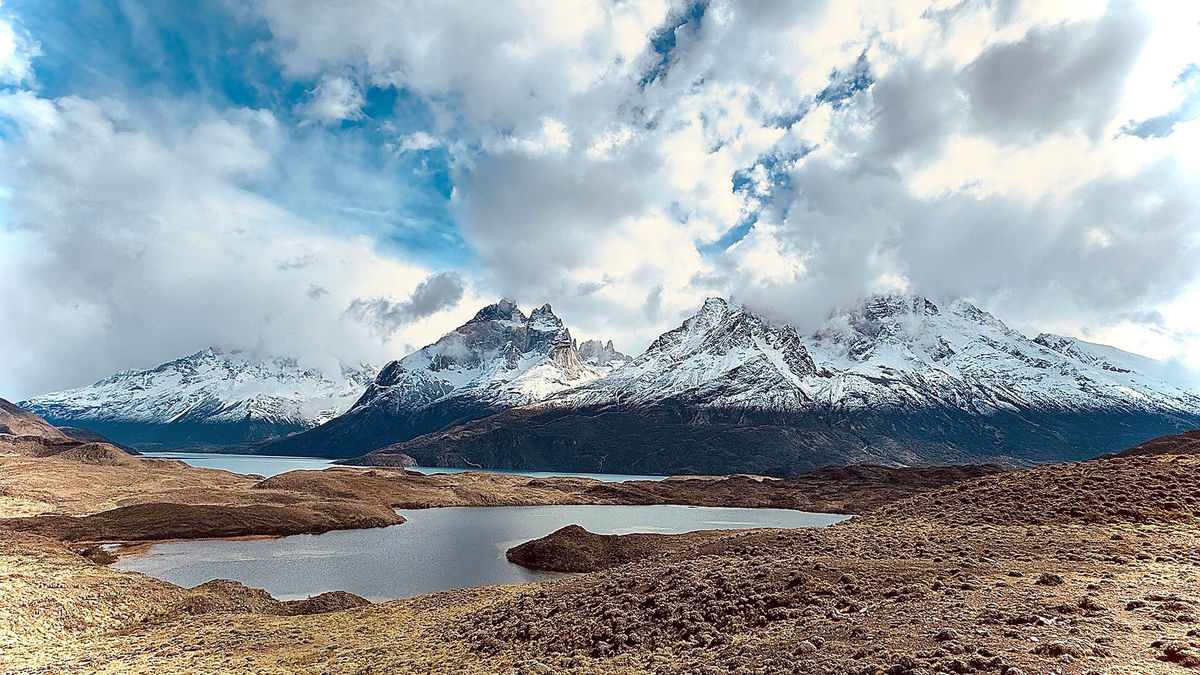
By the end of the day, other images — soaring condors, guanaco herds and the majestic interplay of peaks and clouds — had wiped the incident from our minds. It was a glorious day, chattering teeth and all.
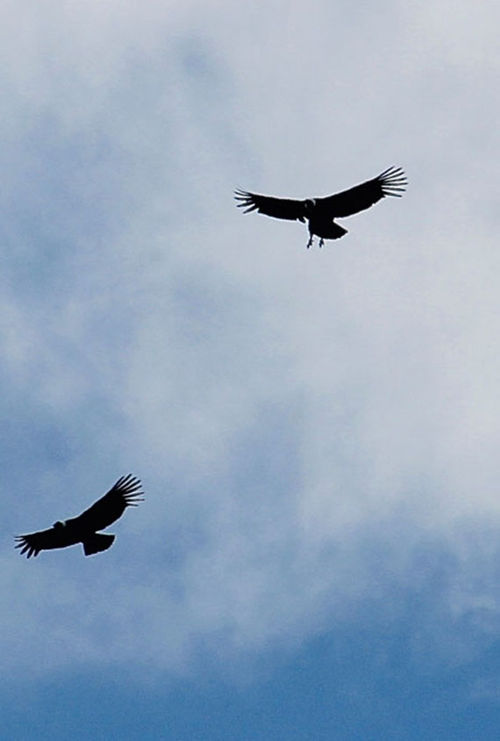
It was not unusual to see Condors soaring in the air on our wildlife and landscape tour. Photo Credit: Arnie Weissmann
Before the conference, a “pre-summit adventure” showcased an expanding definition of adventure. Twelve hundred miles north of Puerto Natales, the operators BirdsChile and Chiloe Natural hosted our group for a fantastic five days of birding, bicycling, hiking and river rafting near Puerto Varas and on Chiloe Island. (Kayaking, also on the agenda, was canceled due to expected high winds.) While these activities fit easily into most people’s definition of adventure, one activity, featured every day, might not: gourmet meals.
Eating sea squirts and tasting smoked salmon liquor certainly might qualify as adventure; in any case, no one quibbled about the inclusion of gastronomy, particularly the very personal and authentic local meals we enjoyed.
I noted in my summit keynote that the range of what could be considered adventure is expansive in the ATTA’s latest research. Its headline finding was that 67% of travelers are “open to adventure,” which would size the category as a potentially $1.16 trillion market segment.
The research, supported by EF World Journeys, breaks down adventure travelers into four categories: Adventure Intensives (adrenaline junkies, though I noticed gastronomy is included in listed “activities”); Cultural Explorers (again, gastronomy); Nature Enthusiasts (“seeking comfort + connections” among “key takeaways”); and Experience Samplers (including city trips and museums).
More traditional adventure activities are also included in each category, but I think it’s fair to say that the adventure category has become more — you choose: elastic? inclusive? — to get to the $1.16 trillion number.
I’ll go with inclusive. I had once asked ATTA CEO Shannon Stowell about a previous Summit in Tuscany, a region known more for producing olive oil than adrenaline. He acknowledged the expanding definition but added a caveat: “It must be immersive. No drive-bys.”
Amen.
My caveat to the growing activities counting as adventure goes back to my puma experience. Companies that want to take advantage of the expanding definition of adventure must recognize that adventure newbies need counseling in responsible behaviors: Yes, no drive-bys. And, in fact, sometimes you must get off the road completely to adventure responsibly.